

Processing &
The Internal Market
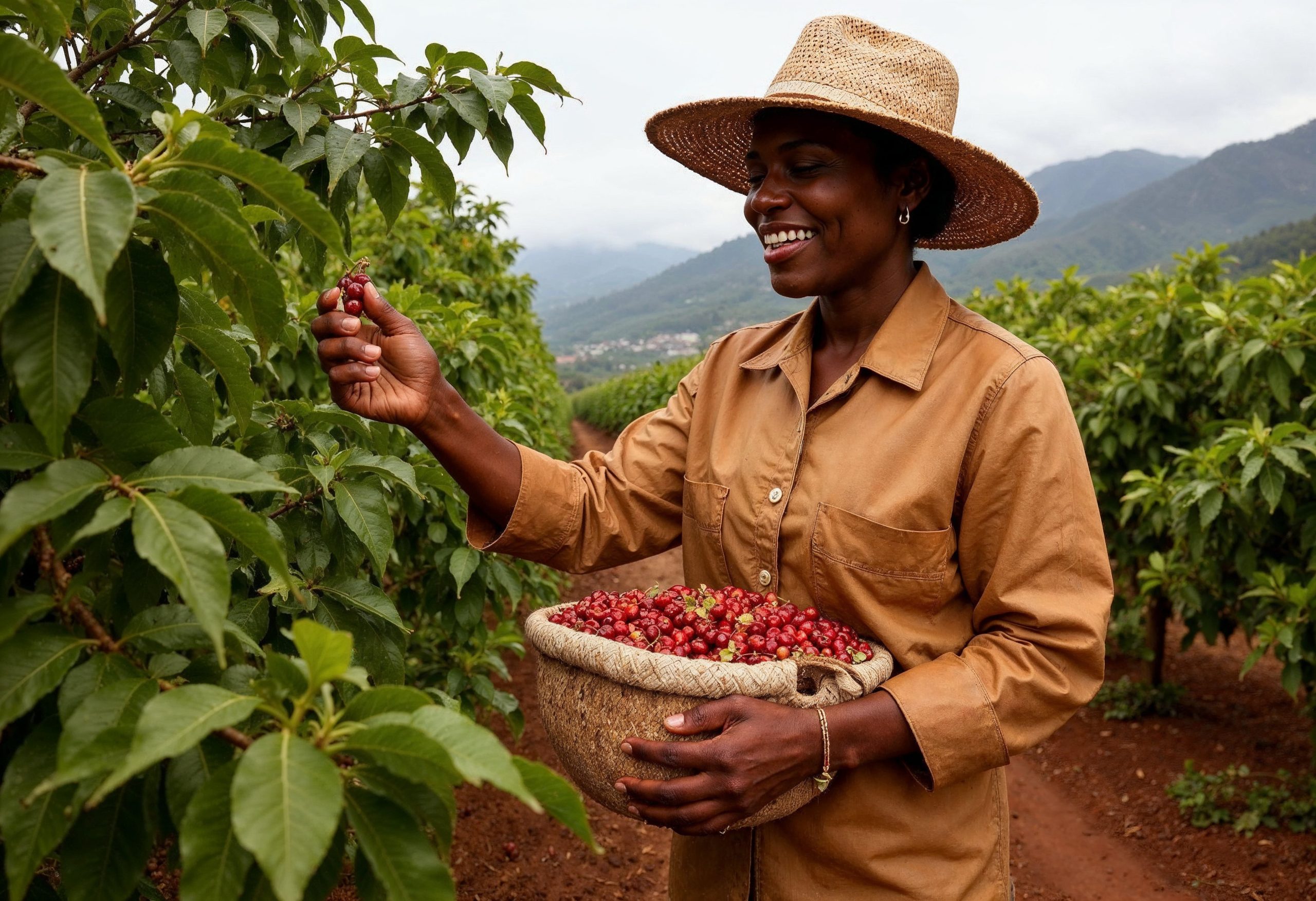
No other groups of small farmers anywhere in the world have come close to producing consistently extraordinary qualities the Kenyans do, year after year. This is due not only to the generous combination of equatorial sunlight, red-orange volcanic loamy soils, unique moderate climate, and special varieties of Arabica originating in Kenya and still unique to East Africa (the SL28 being the best), but also to the organization of the farmers into small, craft-oriented, cooperative processing centers. These cooperatives are spread out so that one is always within walking distance of any farmer. Each day’s harvest is separately processed into small boutique lots of finished green coffee that are then sold individually at an auction in Nairobi. Auctions are the answer to a quality seeker’s prayers; unblended lots of extraordinary quality can be found and purchased by relatively small but high-quality buyers willing to pay the price.
All quality coffees are washed, and then carefully sorted. The highest grade is AA, which consists of large, high-density beans, followed by AB, slightly smaller beans. The grade AA is no guarantee of quality; an AA coffee can vary from mediocre to spectacular. AB can also be of very high quality, but, in my experience, never attains the heights an AA can.
Ripe coffee cherries are delivered to the cooperative factories for pulping, fermentation, washing/grading and drying. The dry parchment will then be delivered to the various commercial dry mills for hulling, grading and bagging off into 60 kg sisal export bags. Important to note is that Kenya coffee is fully washed and ‘batch-processed’ in relatively small quantities, and each batch retains its identity and is fully traceable.